

Summer evenings in Prague always seem reluctant to end. The golden glow of the setting sun filled the streets, stretching the shadows of passersby long, long into the distance.
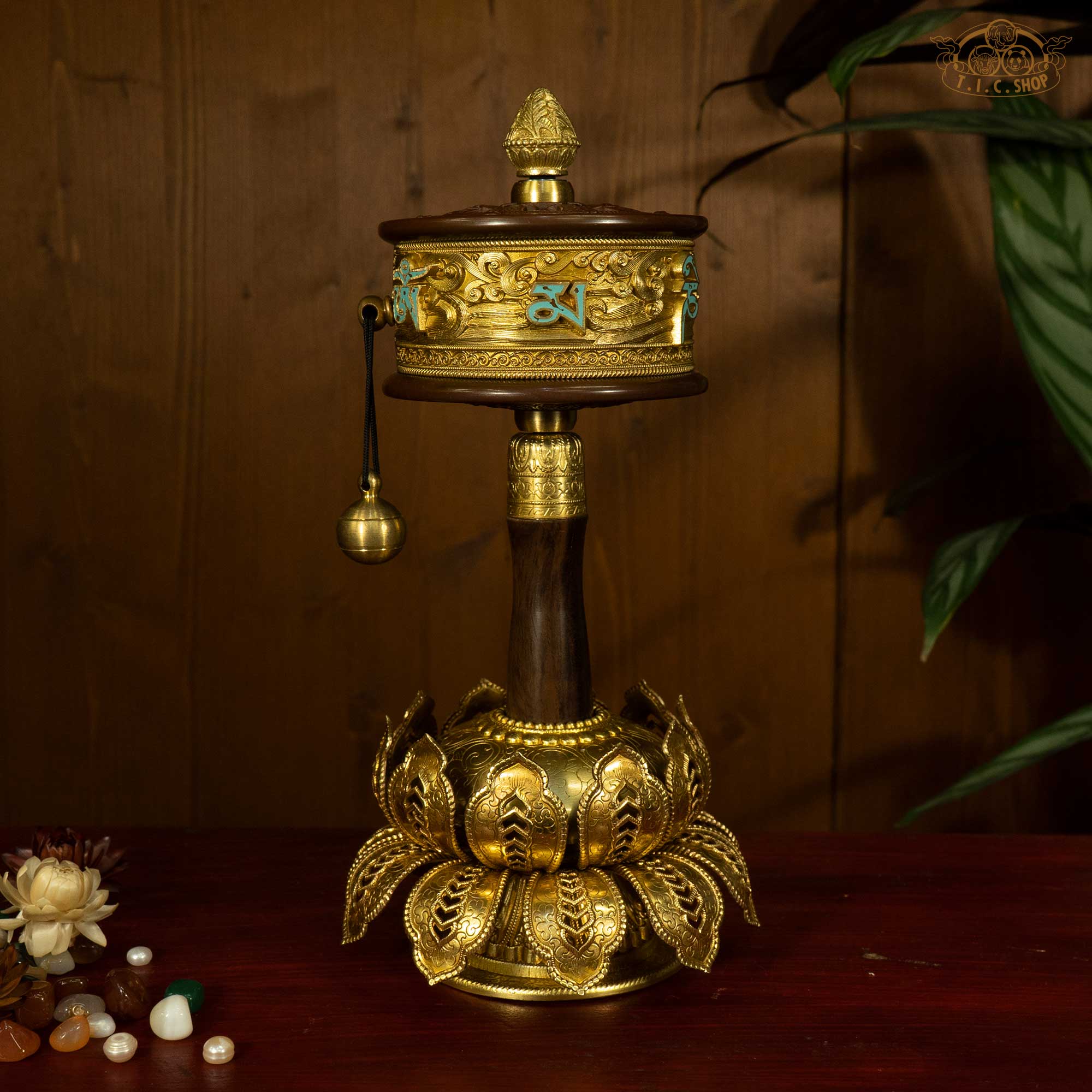
It was time to close the shop. As always, we took down the flags that waved outside and moved the prayer wheel at our front door back inside.
Just then, my eyes happened to fall upon the corner of the shop window. There, at some unknown moment, someone had quietly left a white porcelain Buddha statue. Perhaps a passerby, hurrying on their way, had hoped to find it a peaceful home. Or perhaps it was some unspoken understanding that had brought it, quite unexpectedly, to the corner outside our shop on this warm summer evening.
The golden light of the setting sun fell gently across its white porcelain form, making it shimmer softly. With his eyes lowered, the Buddha looked peaceful and serene.
I quickly took out my phone to capture this extraordinary moment.
The moment I gently lifted the Buddha statue into my hands, an indescribable sense of reverence, joy, and peace arose within me. We carefully carried the Buddha inside and gently wiped away the dust that had settled upon it with a clean, damp cloth. Finally, we respectfully placed it on the altar inside the shop.
At that moment, a phrase many have heard suddenly came to mind:
“The Buddha has come.”
What Does “The Buddha Has Come” Mean?
In the minds of many people, “The Buddha has come” might suggest the arrival of some kind of miracle. Yet that evening, as I held the warm, smooth white porcelain Buddha in my hands, I came to a deeper understanding of these words.
I. The Buddha Has No Coming or Going
The Diamond Sutra says:
“The Tathagata comes from nowhere and goes nowhere; therefore, he is called the Tathagata.”
Buddhist wisdom teaches us that truth, and our true nature, have always been present in the world. There is neither coming nor going.
Perhaps that white porcelain Buddha had been quietly sitting in that corner for some time, with the evening sun shining upon it all the while. Yet it was not until that moment, when I truly “saw” it and felt a sense of “reverence”, that the Buddha entered my world.
It was not that the Buddha had traveled from somewhere far away and arrived at our shop. Rather, our inner compassion and awareness met the outward form of the Buddha on that ordinary Wednesday evening.
II. Washing Away the Dust, Revealing Our True Nature
The white porcelain Buddha was pure and undefiled by nature, merely covered with dust for a while. And is our own true nature not much the same?
In the trivialities and busyness of everyday life, we are often overwhelmed by worries and restlessness, and the peace that has always dwelled within us becomes obscured.
When we gently wash the dust from the Buddha statue with clean water, it is more than a simple act of cleaning. It feels like a quiet reminder to clear away the dust within our own minds.
When the dust is gone, the light naturally shines through.
III. Where the Mind Turns, Reverence Finds a Place
Who left the Buddha statue here? We may never know.
Perhaps it was through this wondrous convergence of causes and conditions that we found the Buddha in that quiet corner beneath the shop window, and chose to respectfully bring it inside and place it on the altar.
In that moment, something more than the Buddha entered our little shop, a quiet sense of mindfulness, compassion, and reverence found its place in our lives.
The Buddha has always been here. We simply do not always see.